A Zine for the DIY Rebellion
Diving deeper into the grunge-inspired editorial system that turns underground fashion and music into visual noise with purpose.
Date
Category
Title

Rebellion Starts With Research.
Static began as a personal test of courage—a project where I chose to challenge myself with something I’d never done before. There were no creative limitations, so I used the freedom to explore a style I’d always admired but never attempted: grunge.
I wanted to prove that grunge could be executed with intention, structure, and beauty—that chaos could coexist with clarity. My research focused on how underground subcultures use visual design to express rebellion and individuality. I studied DIY fashion, punk zines, and streetwear movements to understand how imperfection and distortion become tools of authenticity. Influences included Dazed, ID, and 032c—each known for their ability to merge fashion, art, and protest through experimental typography and photography.
This exploration established the foundation for Static’s identity: bold, tactile, and unapologetically raw—a controlled rebellion within the grid.

From Noise to Narrative.
The name Static came from the metaphor of visual “interference”—the kind of energy that disrupts and demands attention. My goal was to channel rebellion not through randomness, but through clarity within chaos. The challenge was to create a visual system that broke traditional magazine rules while maintaining flow and structure.
The early concept sketches explored masthead lockups, hand-drawn symbols, and collage-inspired grids that embodied the zine’s voice: loud, experimental, and self-aware.

A System Built to Break Its Own Rules.
I developed each spread balanced in alignment and distortion, rhythm and rupture. Denim scans, marker strokes, tape overlays, and xerox textures were layered into compositions that looked spontaneous but were carefully arranged.
Every visual decision had intention: each tear, fold, or overlay pushed the story forward, giving “chaos” a refined sense of purpose.

Type Became Voice.
Typography drives Static’s visual tone. Futura served as the structural base, while warped display fonts and scanned letterforms provided energy and unpredictability. The type hierarchy followed emotion more than scale—sometimes whispering, sometimes shouting, but always maintaining balance with the photography.
Each spread treated typography as its own texture—part of the composition rather than sitting on top of it.


Fashion Meets Noise.
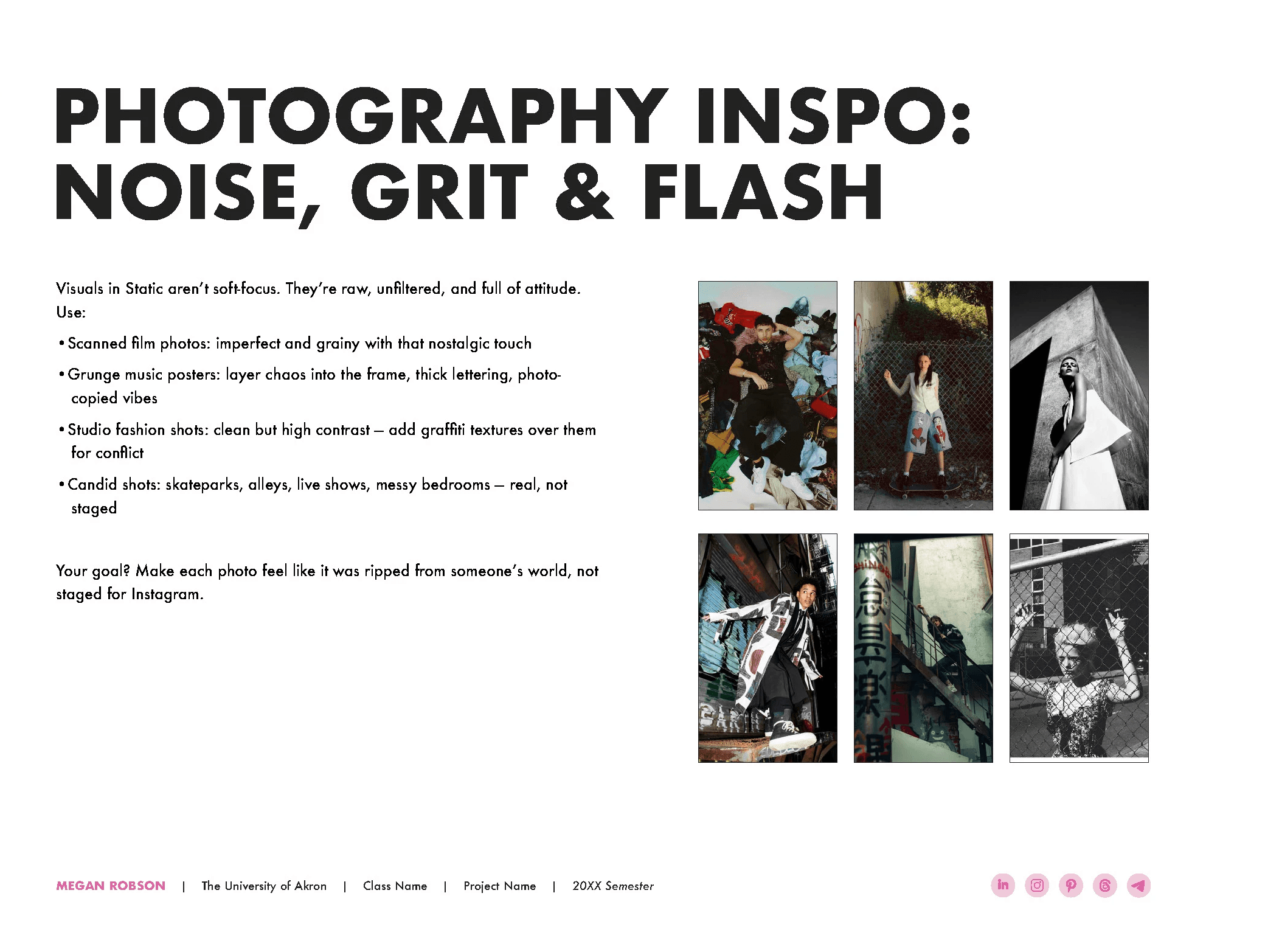
Photography in Static blurred the line between editorial polish and DIY imperfection. I used a mix of studio portraiture, film scans, and layered imagery to mimic zine collage methods. The photographs were integrated as texture, not decoration—ripped, taped, or repeated until they became part of the design language itself.
The resulting imagery felt human, tactile, and deeply connected to the underground stories it represented.


When DIY Becomes Editorial.
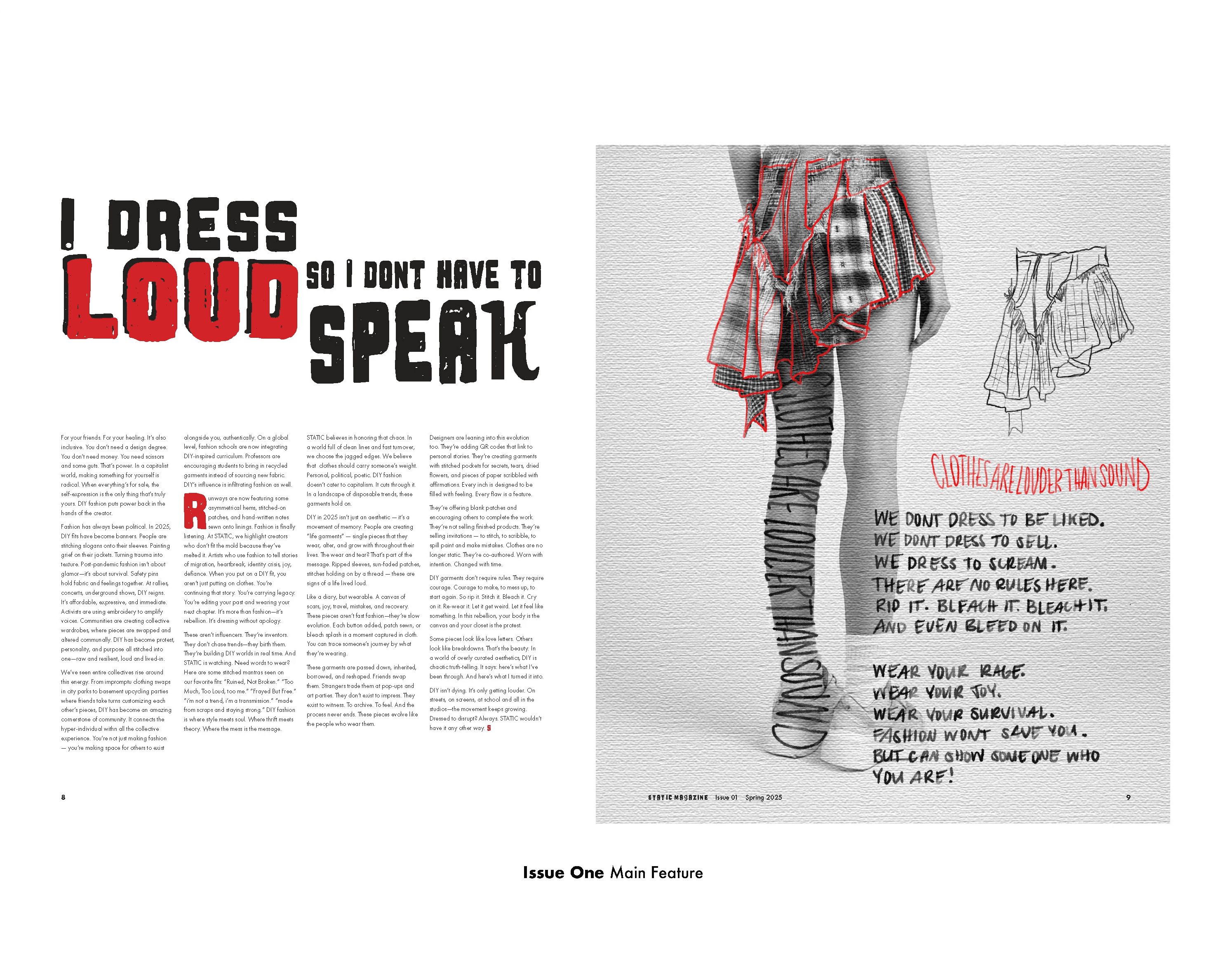
The magazine’s lead feature, “Dressed to Disrupt,” explored DIY fashion as both rebellion and self-expression. Supporting articles spotlighted artists like Deb Never and Ethel Cain—musicians who merge visual style and sound. Each spread was designed to feel like a visual protest, combining oversized headlines, layered photography, and kinetic type movement.
The pages were built for tension: readable but raw, refined yet unfiltered.

Contrast Drives Emotion.
The magazine’s palette was intentionally limited—black and white with bold red accents—to mirror the intensity of protest and power. I paired these with scanned physical materials like denim, marker, and ink smudges to achieve a raw tactile quality. The design feels printed and physical even on screen, bridging the analog and digital worlds of design.

A Finished Rebellion.
The completed Static Magazine embodies its name—visual noise turned into system. Across its 18 pages, every layout, texture, and typographic choice serves a rhythm of rebellion and restraint. The magazine reads as a curated experience rather than a collection of spreads, uniting underground identity and high design into a single visual statement.


Design is Rebellion With Intent.
Static taught me that experimental design only works when every disruption has meaning. The process of building rhythm within chaos strengthened my editorial design instincts—how to balance energy and control, structure and personality.
It’s a project that doesn’t just showcase style—it demonstrates thinking, process, and the ability to design emotion with precision.




escriptive case studies that take you through Megan’s full creative process—from the first idea to the final design.
